
Our Mission
PeopleBeatingCancer supports an evidence-based integrative approach to cancer care. For most newly diagnosed patients, FDA-approved therapies form the foundation of treatment, while evidence-based complementary therapies may help reduce side effects and improve survivorship.
Click the orange button to the right to learn more.
- You are here:
- Home »
- Blog »
- Multiple Myeloma »
- Multiple Myeloma-Induced Spine Fractures
Multiple Myeloma-Induced Spine Fractures
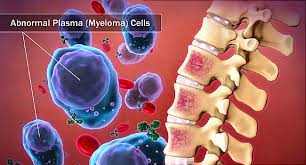

Multiple Myeloma-Induced Spine Fractures. How serious are they? What are my therapy options? Can I avoid chemotherapy and/or radiation?
Dear David, “A recent fall and broken back (9 fractures) revealed that I have osteoporosis, and a full-body bone scan revealed myeloma. I have a feeling I’ve had it for a while, but I haven’t verified what stage I’m at. I’m afraid to pursue conventional chemotherapy and am desperately looking for an alternative that won’t harm my healthy cells. I thought red light therapy might be an option. Is there a way around a potential advanced MM treatment other than chemotherapy or radiation? What can I expect if I have to undergo this path?
Thank you in advance,
Dear Multiple Myeloma-Induced Spine Fractures,
I am sorry to learn of your MM diagnosis. The good news is that MM management and treatment have made remarkable strides over the past 30 years. Not just in chemotherapy regimens, but in diagnostics and staging, imaging,and support therapies such as bone healing.
I understand your feeling that you’ve had MM for a while. Research has documented that most, if not all, MM patients start with MGUS (pre-MM stage), and slowly progress to full MM. Also, it is well documented that MM itself causes osteoporosis.
While bone involvement is only one of the four main CRAB symptoms, in my experience, it is the most difficult symptom to manage. I say this because bone involvement in the form of bone lesions can be a stubborn symptom to manage long term. With nine fractures in your spine, you will go through a process of having to stabilize the MM (get rid of the lesions completely, meaning you want to achieve the deepest remission possible while healing all nine fractures.
- I encourage you to “prehabilitate” before you begin therapy.
- I encourage you to enhance your gut microbiome
- I encourage you to learn as much as you can about MM.
- Issues to consider
- I encourage you to talk to your oncologist about a procedure called Kyphoplasty.
- I encourage you to talk to your oncologist about your bone health
- I encourage you to exercise before, during and after therapy (with your onc’s input)
To address your question about toxic vs. non-toxic therapy, I share your aversion to toxic treatments. However, I know of no evidence-based, non-conventional therapies that have demonstrated, consistently, the ability to do what I outline above. Research has shown that more than 90% of newly diagnosed MM patients respond to both triplet and quadruplet ( 3 or 4) induction regimens such as DVRd. Your goal is to achieve the deepest “response” possible. A deep response to your induction therapy gives you the best chance, according to research, at a long overall survival, aka length of life.
Though I’m not sure how mobile you are these days, I encourage you to exercise, eat nutritiously, and supplement with some of the bone health supplements mentioned in the bone health blog. You may already be deficient in vitamin D and magnesium.
Yes, chemo and radiation can be tough. Prehabilitation can help to ease the side effects, according to research. Complementary therapies such as exercise, supplementation, and red light therapies can help you heal your fractures and build bone health. My experience is that newly diagnosed MM patients do best if they pursue a combination of conventional and non-conventional therapies.
Let me know if you have any questions. Hang in there,
David Emerson
MM Survivor
Cancer Coach
Director PeopleBeatingCancer
Questions to ask your oncologist:
- What stage of MM do I have?
- Understanding the specific stage of MM is crucial for determining the appropriate treatment plan.
- What are the treatment options available for my type of myeloma?
- Discuss the different treatment modalities such as surgery, chemotherapy, radiation therapy, immunotherapy, targeted therapy, and hormone therapy.
- What is the goal of treatment?
- Clarify whether the treatment aims for “potentially curative,” control of the disease, or symptom management.
- What are the potential side effects of the proposed treatments?
- Understanding potential side effects helps patients prepare for and manage the impact of treatment on their daily lives.
- How will the treatment affect my quality of life?
- Discuss the potential impact on daily activities, work, and overall well-being.
- What is the expected timeline for my treatment?
- Gain an understanding of the duration of each treatment phase and the overall timeline.
- Are there any clinical trials or experimental treatments available for my condition?
- Inquire about any ongoing clinical trials or emerging treatments that may be suitable for your specific cancer type.
- What support services are available for MM patients?
- Ask about support groups, counseling, or other resources that can help you cope with the emotional and psychological aspects of cancer.
- How will my treatment be coordinated with other healthcare professionals?
- Understand how your oncologist will collaborate with other specialists, such as surgeons, radiologists, or pathologists.
- What lifestyle changes can I make to support my treatment and recovery?
- Discuss potential changes in diet, exercise, and other lifestyle factors that may positively impact your overall health.
- What is the cost of treatment, and what is covered by insurance?
- Understand the financial aspects of your treatment, including potential out-of-pocket expenses and insurance coverage.
- How often will I have follow-up appointments, and what monitoring will be done?
- Discuss the frequency of follow-up visits and any necessary imaging or laboratory tests to monitor your progress
Issues to Consider:
Ultra-Low-Dose Radiation for Bone Pain: Can Less Radiation Be Enough?
Ask your oncologist about the dose of radiation if he/she intends to use radiation therapy to stabize your fractures.
What is Multiple Myeloma? Oncology has it backwards…
“Considering only FDA approved MM therapies represents short-term thinking. Newly diagnosed multiple myeloma patients are put at a huge disadvantage if they think short-term…”
How Long Can a Person Live with Multiple Myeloma?
“How Long Can a Person Live with Multiple Myeloma? Statistics are 5-7 years with an average five year survival of 51%. I say statistics are nonsense…”
Multiple Myeloma Chemotherapy- The Cure vs. Control Debate
“Do you try to cure your incurable blood cancer? What is your oncologist’s definition of cure anyway?”
Although not often openly acknowledged, “cure vs control” is the dominant philosophical difference behind many of the strategies, trials, and debates related to the management of myeloma.
You have been diagnosed with incurable cancer with an average survival, according to the American Cancer Society, of 5-7 years depending on the stage at diagnosis. Your challenge as a newly diagnosed myeloma patient is to weigh the pros and cons of cure vs. control of your disease. Is your multiple myeloma chemotherapy supposed to cure your MM or just control it?”
Multiple Myeloma Diagnostics- FISH, SPEP, CBC, FLC’s and Imaging
“If you have multiple myeloma your plasma cells produce unhealthy antibodies called monoclonal proteins (M proteins). The accumulation of M proteins in your body can damage organs like your kidneys and liver…”
Multiple Myeloma Response – MRD, sCR, CR, VGPR, PR ???
“Whether or not every patient with multiple myeloma needs to be “pushed” into a strict complete remission (CR) was debated here at the Lymphoma and Myeloma meeting…”
Stem Cell Transplant for Newly Diagnosed Multiple Myeloma- What are Risks?
“Two-thirds of HSCT survivors develop at least one chronic health condition; while a fifth develop severe or life-threatening conditions.”
Low-Dose Revlimid Maintenance Post Autologous Stem Cell Transplant- Pros/Cons
““Serious adverse events were reported in 494 (45%) of 1097 patients receiving lenalidomide compared with 150 (17%) of 874 patients on observation…”
Relapsed, Refractory Multiple Myeloma- Therapy Options
“At the time of interim data presentation, there was no difference in overall survival between the two arms…”
Myeloma-Induced Spine Fractures Myeloma-Induced Spine Fractures