

Our Mission
PeopleBeatingCancer supports an evidence-based integrative approach to cancer care. For most newly diagnosed patients, FDA-approved therapies form the foundation of treatment, while evidence-based complementary therapies may help reduce side effects and improve survivorship.
Click the orange button to the right to learn more.
- You are here:
- Home »
- Blog »
- Pancreatic Cancer »
- Can Chemotherapy Shrink Pancreatic Cancer for Surgery?
Can Chemotherapy Shrink Pancreatic Cancer for Surgery?
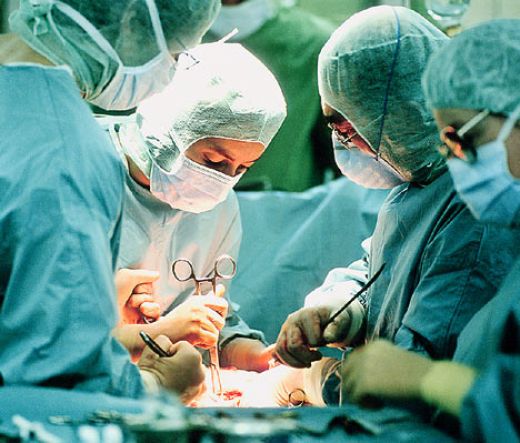

Can Chemotherapy Shrink Pancreatic Cancer Enough for Surgery? For some people with borderline-resectable or locally advanced pancreatic cancer, chemotherapy given before surgery may shrink or control the tumor enough to make surgical removal possible. Researchers are also studying ways to deliver chemotherapy directly to pancreatic tumors—but these local drug-delivery approaches remain experimental.
One of the most important questions following a diagnosis of pancreatic cancer is:
Can the tumor be surgically removed?
Surgery remains the only treatment with realistic curative potential for pancreatic ductal adenocarcinoma (PDAC). Unfortunately, fewer than one in five pancreatic cancers appear confined enough to the pancreas when diagnosed to potentially be removed surgically.
But “unresectable” does not always mean “never resectable.”
For selected patients—particularly those with borderline-resectable and some locally advanced pancreatic cancers—chemotherapy before surgery may control or shrink the cancer enough for surgeons to reconsider an operation.
This approach is generally called neoadjuvant therapy or, when an initially unresectable cancer subsequently becomes operable, conversion therapy/conversion surgery.
That distinction is important because an older study discussed later in this article investigated something quite different: an implantable device designed to deliver chemotherapy directly to a pancreatic tumor.
The technology was promising—but it was tested in laboratory and animal models, not established as a treatment for pancreatic cancer patients.
I am a long-term survivor of an incurable blood cancer called multiple myeloma. My research and experience with evidence-based non-conventional therapies is the reason why I have lived in complete remission from my incurable blood cancer since achieving complete remission in early 1999. I have learned that the best way to manage aggressive cancers is to combine the best of conventional and evidence-based non-conventional therapies.
Scroll down the page and post a question or a comment if there’s anything you’d like to know about pancreatic cancer.
Good luck,
David Emerson
Concepts Central to Managing Your Cancer-
- Integrative Oncology: Combining Conventional and Natural Cancer Therapies
- Complementary Cancer Therapies: Evidence-based
- Managing Cancer Treatment Side Effects: An Evidence-Based Guide to Prevention, Relief, and Recovery
- Cancer Financial Toxicity: Costs, Medical Debt, Insurance, Financial Assistance, and Survivorship
Possible Therapies
- Radiation for Cancer: What Patients Need to Know
- Surgery for Cancer: What Patients Need to Know
- FOLFIRI Chemotherapy: What Cancer Patients Need to Know
- Gemcitabine + Cisplatin (GemCis) for Cancer: What Patients Need to Know
- Anti-Angiogenic Therapy for Pancreatic Cancer: What Patients Need to Know
- Triphendiol for Pancreatic and Bile Duct Cancer: What Happened to This Experimental Drug?
- Pancreatic Cancer, Feverfew and Arsenic Trioxide: What Does the Research Show?
Why Resectability Matters in Pancreatic Cancer
For treatment planning, pancreatic cancers are often divided into three broad categories:
Resectable
The surgeon believes the entire tumor can probably be removed with clear margins.
Borderline resectable
The tumor may involve or contact important nearby blood vessels, making complete removal more difficult.
Chemotherapy is often given first in an attempt to control the cancer and improve the likelihood of successful surgery.
Locally advanced/unresectable
The cancer has grown extensively into nearby blood vessels or structures but has not necessarily spread to distant organs.
These patients are generally treated initially with systemic therapy.
A subset that responds favorably may eventually be reconsidered for surgery.
Read more about pancreatic cancer treatment and resectability from the American Cancer Society.
Can Chemotherapy Make Pancreatic Cancer Operable?
Sometimes.
Modern pancreatic cancer management increasingly uses chemotherapy before surgery, particularly for borderline-resectable disease.
Current systemic treatment options commonly include:
- modified FOLFIRINOX
- gemcitabine plus nab-paclitaxel
- other regimens depending on performance status, age, health, and tumor characteristics
The goal isn’t simply to make the tumor look smaller on a CT scan.
Treatment can also:
- attack possible microscopic metastatic disease,
- demonstrate whether the cancer responds to chemotherapy,
- reduce tumor activity,
- potentially improve the likelihood of obtaining tumor-free surgical margins,
- identify rapidly progressing cancers for which major surgery would probably provide little benefit.
The 2025 NCCN Guidelines for Patients: Pancreatic Cancer recommend neoadjuvant therapy for borderline-resectable pancreatic cancer and identify FOLFIRINOX and gemcitabine combinations among preferred systemic options.
Read the NCCN Guidelines for Patients: Pancreatic Cancer.
European guidance similarly recommends induction treatment rather than immediate surgery for borderline-resectable disease when a clinical trial is not available. FOLFIRINOX/mFOLFIRINOX and gemcitabine plus nab-paclitaxel are major chemotherapy options.
Read the ESMO-based pancreatic cancer recommendations.
How Do Doctors Decide Whether Surgery Has Become Possible?
This is more complicated than simply measuring the tumor.
Following several months of treatment, the multidisciplinary pancreatic cancer team may consider:
- CT/MRI findings
- relationship of the tumor to major blood vessels
- whether distant metastases have appeared
- CA 19-9 response
- the patient’s physical condition
- response to chemotherapy
- nutritional status
- surgical feasibility
Importantly, imaging after chemotherapy can be misleading.
Scar tissue and treatment-related changes around blood vessels can sometimes resemble active tumor. Therefore, a pancreatic cancer that doesn’t dramatically shrink on CT may still potentially be surgically removable.
For this reason, modern recommendations increasingly emphasize the total response to treatment rather than tumor diameter alone.
Read a 2026 review of pancreatic cancer diagnosis, neoadjuvant therapy and surgical decision-making.
CA 19-9 May Provide Another Important Clue
CA 19-9 is not a perfect pancreatic cancer biomarker, and some people do not produce it.
However, when CA 19-9 is elevated before treatment, a substantial decline during chemotherapy can provide evidence that the cancer is responding biologically.
Current European guidance recommends considering surgical exploration in medically fit patients without disease progression who show a favorable treatment response, including a decline in CA 19-9.
This means the important question after chemotherapy may not simply be:
“Did my tumor shrink?”
It may be:
“Considering my scans, CA 19-9, clinical response, and overall health, should an experienced pancreatic surgeon reconsider whether my tumor can be removed?”
What About Delivering Chemotherapy Directly to the Pancreatic Tumor?
This is where the research that originally inspired this PeopleBeatingCancer article becomes interesting.
- Researchers developed an implantable drug-delivery platform that could release chemotherapy directly around pancreatic tumors.
- Rather than circulating chemotherapy throughout the body, the device was designed to deliver a high concentration at the tumor site.
- Researchers tested several pancreatic cancer cell lines and identified paclitaxel as an effective drug for their experimental model.
- They then compared locally delivered paclitaxel with systemic chemotherapy in mouse models containing patient-derived pancreatic tumors.
The results were impressive.
Local therapy produced up to a 12-fold greater suppression of tumor growth compared with systemic administration while reducing drug exposure in other organs.
Read the original study: A Tunable Delivery Platform to Provide Local Chemotherapy for Pancreatic Ductal Adenocarcinoma.
But There Is an Important Limitation
This was preclinical research.
The experiments involved pancreatic cancer cells and mouse models—not pancreatic cancer patients.
Therefore, the study does not demonstrate that an implanted chemotherapy device can currently convert unresectable pancreatic cancer into surgically removable disease in humans.
A later review of locoregional pancreatic cancer treatments continued to describe implantable drug-delivery systems as promising experimental approaches rather than established pancreatic cancer therapy.
Read the review of locoregional pancreatic cancer therapies.
I think this distinction is especially important for pancreatic cancer patients.
Promising laboratory research deserves attention.
But:
preclinical evidence ≠ clinical evidence.
Where Does This Leave Patients Today?
The clinically established strategy for trying to make borderline-resectable—and selected locally advanced—pancreatic cancers operable remains primarily systemic neoadjuvant/induction therapy followed by reassessment at an experienced pancreatic cancer center.
For suitable patients, that usually means a regimen such as modified FOLFIRINOX or gemcitabine/nab-paclitaxel.
Radiation or chemoradiation may sometimes be incorporated, although its precise role after modern multi-agent chemotherapy continues to be studied.
Researchers are simultaneously investigating better ways to deliver drugs directly into pancreatic tumors.
Those approaches may eventually become another tool for improving local tumor control while reducing systemic toxicity.
They aren’t there yet.
Surgery Is Important—but It Is Not the Whole Story
Even successful pancreatic cancer surgery doesn’t guarantee that the cancer has been eliminated.
Microscopic cancer cells may already have escaped the pancreas before surgery.
This is one reason chemotherapy plays such an important role both before and after pancreatic cancer surgery.
The American Cancer Society explains that surgery provides the only realistic opportunity for cure, while also emphasizing that recurrence remains possible even after all visible cancer has been removed.
Read: Surgery for Pancreatic Cancer — American Cancer Society.
PeopleBeatingCancer readers may also want to see:
- FOLFIRINOX Adjuvant to Surgery in Pancreatic Cancer
- Anti-Angiogenic Therapy for Pancreatic Cancer: What Patients Need to Know
- Evidence-Based, Non-Conventional Pancreatic Cancer Therapy
What About Integrative Therapies?
PeopleBeatingCancer takes an integrative approach to cancer care.
That means conventional cancer treatment remains the foundation of care while nutrition, exercise, symptom management, and carefully evaluated complementary therapies may be considered to support treatment and survivorship.
Curcumin is one example frequently discussed in pancreatic cancer research.
Laboratory studies suggest that curcumin may influence pancreatic cancer pathways and may increase sensitivity to chemotherapy drugs such as gemcitabine.
There has also been limited human research.
However, the clinical evidence remains far weaker than the evidence supporting established pancreatic cancer treatments, and oral curcumin has significant bioavailability limitations.
Therefore, curcumin should not be presented as a substitute for chemotherapy or surgery.
Patients considering curcumin or other supplements during chemotherapy should discuss them with their oncology team because supplements can potentially interact with cancer treatment.
For a deeper discussion, see:
- Curcumin Enhances Pancreatic Cancer Chemotherapy
- Pancreatic Cancer: Curcumin, Omega-3 and Chemotherapy
PeopleBeatingCancer Evidence Rating
| Therapy/Strategy | Evidence | PBC Rating | What Patients Should Know |
|---|---|---|---|
| Surgery for resectable pancreatic cancer | Guidelines + clinical evidence | Strong | Only established treatment offering realistic curative potential |
| Neoadjuvant chemotherapy for borderline-resectable PDAC | Guidelines + prospective/clinical evidence | Strong | Standard strategy before considering surgery |
| FOLFIRINOX/mFOLFIRINOX | Clinical trials + guidelines | Strong | Major neoadjuvant/induction option for medically fit patients |
| Gemcitabine + nab-paclitaxel | Clinical evidence + guidelines | Moderate–Strong | Important alternative multi-agent regimen |
| Conversion surgery after response in locally advanced PDAC | Observational/prospective evidence | Moderate | Appropriate only for carefully selected responders |
| Local implantable chemotherapy delivery | Laboratory + animal studies | Preclinical | Promising concept but not established patient therapy |
| Curcumin as an adjunct to chemotherapy | Mostly laboratory/preclinical + limited human evidence | Preliminary | Should not replace conventional treatment |
Questions to Ask Your Pancreatic Cancer Team
If you’ve been told that your pancreatic cancer is borderline resectable or locally advanced, consider asking:
- Is my tumor resectable, borderline resectable or locally advanced?
- Which blood vessels are involved?
- Am I a candidate for modified FOLFIRINOX?
- Would gemcitabine plus nab-paclitaxel be appropriate?
- What is the goal of my chemotherapy—tumor control, eventual surgery, or both?
- How will we monitor my CA 19-9?
- When will imaging be repeated?
- At what point will my case be reconsidered for surgery?
- Has my case been reviewed by a multidisciplinary pancreatic cancer team?
- Should I get a second surgical opinion from a high-volume pancreatic cancer center?
That final question can be particularly important.
Resectability is not always a simple yes-or-no determination, especially after neoadjuvant therapy.
The Bottom Line
The original research behind site-specific chemotherapy for pancreatic cancer remains fascinating: delivering chemotherapy directly to a pancreatic tumor produced dramatically greater local tumor suppression than systemic paclitaxel in experimental models.
But it remains preclinical research, not an established treatment capable of making pancreatic tumors surgically removable in patients.
The more important development for patients today is the increasing use of neoadjuvant and induction chemotherapy.
For borderline-resectable pancreatic cancer—and selected patients with locally advanced disease—modern combination chemotherapy can sometimes control the disease sufficiently for surgeons to reconsider resection.
If your pancreatic cancer has been labeled “unresectable,” one useful question may therefore be:
“Could treatment make me a candidate for surgery later—and when will my case be reassessed by an experienced pancreatic cancer surgeon?”
That question reflects how pancreatic cancer treatment has changed since the original site-specific chemotherapy research was published.
Non-conventional Pancreatic Cancer Therapies:
- Low-Dose Naltrexone (LDN) as Pancreatic Cancer Therapy
- Pancreatic Cancer-Pharmacologic Ascorbic Acid, Curcumin, Bitter Melon?
- Pancreatic Cancer, Feverfew and Arsenic Trioxide
- Anti-Angiogenic Therapy for Pancreatic Cancer: What Patients Need to Know
Site-specific chemotherapy treatment could bring new hope to pancreatic cancer patients
“A team of researchers from Massachusetts General Hospital and MIT have developed an innovative new strategy for treating PC with an implantable mesh patch designed to deliver chemotherapy drugs directly to the cancer site…
A big challenge in treating PC comes from its location in the body, Ligorio explained. The pancreas is buried between the stomach and spine, and surrounded by tissue, organs and nerves. This makes pancreatic tumors both painful and difficult to remove by surgery, especially if they have spread into surrounding tissues…
If it is not possible to shrink the size of a pancreatic tumor to the size where surgical removal is possible, the prognosis for patients is grim. Only 8% of pancreatic cancer patients will survive for longer than five years without surgery…
In a study of laboratory models of PC, the researchers found this approach was 12 times more effective in reducing tumor size than traditional IV drug treatment…”
Can Chemotherapy Shrink Pancreatic Cancer Can Chemotherapy Shrink Pancreatic Cancer Can Chemotherapy Shrink Pancreatic Cancer