Our Mission
PeopleBeatingCancer supports an evidence-based integrative approach to cancer care. For most newly diagnosed patients, FDA-approved therapies form the foundation of treatment, while evidence-based complementary therapies may help reduce side effects and improve survivorship.
Click the orange button to the right to learn more.
- You are here:
- Home »
- Blog »
- Skin Cancer »
- Tanning and Skin Cancer: Risks, Warning Signs, and Evidence-Based Prevention
Tanning and Skin Cancer: Risks, Warning Signs, and Evidence-Based Prevention
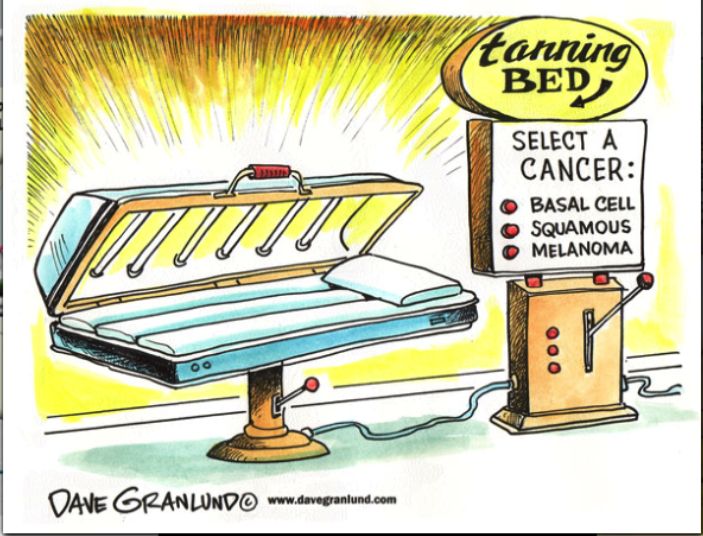

Tanning and Skin Cancer: Risks, Warning Signs, and Evidence-Based Prevention. Can tanning beds cause melanoma? How can you recognize skin cancer? And what can you do today to reduce your risk—even if you spent years tanning?
The research is clear: ultraviolet (UV) radiation from tanning beds and sunlight damages skin cells and increases the risk of melanoma, basal cell carcinoma, and squamous cell carcinoma.
But there is encouraging news. Even if you spent decades tanning, you can take meaningful steps today to protect your skin, recognize suspicious changes, and reduce additional UV exposure.
I am a long-term survivor of an incurable blood cancer called multiple myeloma. My research and experience with evidence-based non-conventional therapies is the reason why I have lived in complete remission from my incurable blood cancer since achieving complete remission in early 1999. I have learned that the best way to manage cancer is to combine the best of conventional and evidence-based non-conventional therapies.
Scroll down the page and post a question or a comment if there’s anything you’d like to know about breast cancer.
Good luck,
David Emerson
Concepts Central to Managing Your Cancer-
- Integrative Oncology: Combining Conventional and Natural Cancer Therapies
- Complementary Cancer Therapies: Evidence-based
- Managing Cancer Treatment Side Effects: An Evidence-Based Guide to Prevention, Relief, and Recovery
- Cancer Financial Toxicity: Costs, Medical Debt, Insurance, Financial Assistance, and Survivorship
Possible Therapies-
- Keytruda® (Pembrolizumab) for Cancer: What Patients Need to Know
- Opdivo (Nivolumab) for Cancer: What Patients Need to Know
- Yervoy (Ipilimumab) for Cancer: What Patients Need to Know
- Radiation for Cancer: What Patients Need to Know
- Chemotherapy for Cancer: What Patients Need to Know Before, During, and After Treatment
- Tecentriq® (Atezolizumab) for Cancer: What Patients Need to Know
Melanoma: What Patients Need to Know
- Melanoma and Pain: What Patients and Survivors Need to Know
- Basal Cell Carcinoma Treatment: What Patients Need to Know.
What Patients Need to Know
- Indoor tanning increases skin cancer risk. Research links tanning beds to melanoma and non-melanoma skin cancers.
- A tan is evidence of UV-related skin damage. A so-called base tan does not provide meaningful protection from future damage.
- Melanoma is not the only concern. Basal cell and squamous cell carcinomas can also cause serious health problems.
- Early detection matters. New, changing, bleeding, or nonhealing skin lesions deserve medical attention.
- Prevention is possible. Avoiding tanning beds, using sunscreen, wearing protective clothing, and seeking shade can reduce UV exposure.
- Some complementary therapies are being studied. However, supplements cannot replace established sun-protection measures.
Does Indoor Tanning Really Increase Skin Cancer Risk?
Yes.
A 2021 systematic review and meta-analysis examined research involving thousands of melanoma and non-melanoma skin cancer cases. Compared with people who had never used indoor tanning devices, those who had used them had higher relative risks of developing several types of skin cancer.
| Type of skin cancer | Increased relative risk associated with indoor tanning |
|---|---|
| Melanoma | 27% |
| Basal cell carcinoma (BCC) | 24% |
| Squamous cell carcinoma (SCC) | 58% |
| Non-melanoma skin cancer overall | 40% |
These percentages represent pooled relative-risk estimates, not the absolute probability that an individual will develop skin cancer. Individual risk depends on factors including age, skin characteristics, genetics, and lifetime UV exposure.
Research: Indoor Tanning and the Risk of Overall and Early-Onset Melanoma and Non-Melanoma Skin Cancer
Why tanning at a young age is especially concerning
The same meta-analysis found stronger associations with skin cancer diagnosed before age 50. Indoor tanning was associated with a 75% higher relative risk of early-onset melanoma. Starting indoor tanning at age 20 or younger was also associated with increased melanoma risk.
The message is important for teenagers and young adults: skin damage accumulated early in life can have consequences decades later.
My Personal Experience With Tanning
When I was a teenager, I loved having a tan. I spent as much time in the sun as possible. I even used aluminum foil spread across a record album to reflect sunlight toward my face. I sometimes used a tanning bed to get a “base” before I travelled someplace sunny for spring break.
When my family traveled somewhere warm, I often burned and peeled before eventually developing a darker tan. At the time, I wasn’t thinking about skin cancer.
I thought having a tan made me look healthier and more attractive.
Today, as a long-term cancer survivor, I look at those experiences differently. I pay much closer attention to my skin, particularly moles that appear to be changing in size, shape, or color.
I wish I had understood then what I understand now: a tan is not evidence of healthier skin. It is a response to UV damage. That does not mean everyone who tanned when they were younger will develop skin cancer. It does mean that prevention and awareness become increasingly important as we age.
Melanoma vs. Basal Cell vs. Squamous Cell Carcinoma
Skin cancer is not a single disease. The three major categories have different appearances, behaviors, and treatment considerations.
| Cancer type | Common warning signs | Why it matters |
|---|---|---|
| Melanoma | New or changing mole, irregular border, multiple colors, unusual spot | Can spread to other organs and become life-threatening |
| Basal cell carcinoma | Pearly bump, persistent pink patch, sore that bleeds or does not heal | Usually grows slowly but can damage surrounding tissue |
| Squamous cell carcinoma | Scaly patch, firm bump, crusted lesion, nonhealing sore | Can invade deeper tissues and sometimes metastasize |
Although basal cell carcinoma is generally less aggressive than melanoma, it should not be ignored. Squamous cell carcinoma can also become dangerous, particularly in people with weakened immune systems or aggressive tumors.
Learn more: Skin Cancer Pain or Itch?
How Can I Tell if a Mole Might Be Melanoma?
Dermatologists frequently recommend remembering the ABCDE warning signs.
The ABCDEs of Melanoma
A — Asymmetry: One half of the mole looks different from the other.
B — Border: The edges appear irregular, blurred, or poorly defined.
C — Color: The lesion has uneven coloring, including different shades of brown, black, red, white, or blue.
D — Diameter: Melanomas may be larger than 6 millimeters, although some are smaller.
E — Evolving: The spot changes in size, shape, color, elevation, or symptoms.
Of these signs, evolving or changing lesions deserve particular attention. Also consider the ugly duckling sign: a mole that looks noticeably different from your other moles. Not every melanoma follows the ABCDE pattern. Some are pink or relatively uniform in color. Melanoma can also appear beneath nails or on the palms and soles.
When should you see a dermatologist?
Arrange a professional evaluation if you notice:
- A new or changing mole.
- A spot that looks different from your other spots.
- A sore that repeatedly bleeds or fails to heal.
- A persistent scaly, crusted, or growing lesion.
- A dark streak beneath a nail that is new or changing.
Do not attempt to diagnose or remove a suspicious lesion yourself. A dermatologist may examine the area with a dermoscope and recommend a biopsy when necessary. A biopsy with pathological examination is generally required to confirm skin cancer.
Learn more: How to Identify Skin Cancer in 5 Steps
Do You Need an Annual Skin Cancer Screening?
The answer depends on your personal risk. The U.S. Preventive Services Task Force concluded in 2023 that evidence is insufficient to determine whether routine clinician screening provides a net benefit for all asymptomatic adolescents and adults.
This is not a recommendation against skin examinations. Importantly, that conclusion does not apply to people who already have suspicious lesions or a personal or family history of skin cancer.
Patients with a previous melanoma, repeated basal or squamous cell carcinomas, substantial UV exposure, numerous atypical moles, or certain immune-system conditions may benefit from individualized dermatology surveillance. Ask your dermatologist how often you should be examined.
Related reading: Skin Cancer Screening—Pros and Cons
Seven Evidence-Based Ways to Reduce Skin Cancer Risk
1. Stop using indoor tanning beds
Avoiding artificial UV tanning eliminates an unnecessary source of carcinogenic exposure. There is no established safe level of cosmetic indoor UV tanning.
2. Use broad-spectrum sunscreen
Choose broad-spectrum sunscreen with SPF 30 or higher. Apply it generously to exposed skin and reapply approximately every two hours while outdoors, and after swimming or sweating, according to product directions. A randomized Australian trial and its long-term follow-up provided evidence that regular sunscreen use can help reduce melanoma incidence.
Research: Reduced Melanoma After Regular Sunscreen Use: Randomized Trial Follow-Up
3. Wear protective clothing
Wide-brimmed hats, UV-protective clothing, sunglasses, and long sleeves can reduce UV exposure. Clothing is particularly useful when spending extended periods outdoors.
4. Seek shade and limit intense UV exposure
Try to avoid prolonged exposure when the UV index is high. Remember that UV radiation can reach your skin even when temperatures are cool or the sky is cloudy.
5. Become familiar with your skin
Periodically examine your skin, including your back, scalp, feet, and other areas that may be difficult to see. Ask someone to help inspect areas you cannot easily examine. Photographs can help document suspicious changes, but they should not delay medical evaluation.
6. Consider professional skin examinations based on your risk
People with prior skin cancer, substantial lifetime sun exposure, or other risk factors should discuss an appropriate follow-up schedule with a dermatologist.
7. Address vitamin D without intentional tanning
Vitamin D is important for bone and general health, but intentionally exposing your skin to UV radiation is not necessary to maintain adequate vitamin D levels. Dietary sources and supplements can help people who need additional vitamin D. Vitamin D supplementation has not been established as a reliable method of preventing melanoma.
Can Nutrition and Supplements Help Prevent Skin Cancer?
This is an important question for people interested in integrative oncology. Research suggests that certain nutritional compounds may influence inflammation, cellular repair, or responses to UV damage. However, evidence of biological activity is not the same as evidence that a supplement prevents skin cancer in humans.
Nicotinamide (Vitamin B3)
Nicotinamide, also called niacinamide, has been studied as a possible preventive therapy for people at elevated risk of non-melanoma skin cancer. A randomized phase 3 trial included 386 participants who had experienced at least two non-melanoma skin cancers during the previous five years. Participants received either nicotinamide 500 mg twice daily or placebo for 12 months.
The nicotinamide group experienced a 23% lower rate of new non-melanoma skin cancers during treatment. The benefit was not sustained after treatment stopped. These results are promising for selected high-risk patients, but they do not establish that everyone should take nicotinamide or that it prevents melanoma.
Patients should discuss its potential benefits, limitations, and safety with their dermatologist.
Research: A Phase 3 Randomized Trial of Nicotinamide for Skin-Cancer Chemoprevention
Vitamin D
Vitamin D supports normal physiological functions, including bone health. However, evidence does not establish that taking vitamin D supplements prevents melanoma or other skin cancers in the general population. Correcting a deficiency may be appropriate, but supplementation should not be presented as protection against tanning-related UV damage.
Vitamin E and Other Antioxidants
Vitamin E, polyphenols, and other antioxidants have been studied for their effects on oxidative stress and skin biology. Some findings are encouraging in laboratory settings. Nevertheless, convincing clinical evidence that applying vitamin E oil or taking antioxidant supplements prevents melanoma is lacking. These approaches should not replace sunscreen, protective clothing, or dermatological care.
Related reading:
- Skin Cancer Prevention: Nutrition, Supplementation, Lifestyle and More
- Vitamin D, Melanoma, Skin Cancer: What the Research Shows
PeopleBeatingCancer Evidence Rating System
| Intervention | Evidence rating | Interpretation |
|---|---|---|
| Avoiding tanning beds | Strong | Established way to eliminate artificial tanning-related UV exposure |
| Broad-spectrum sunscreen | Strong | Clinical evidence supports prevention of UV damage and certain skin cancers |
| Protective clothing and shade | Strong | Established methods of reducing UV exposure |
| Dermatology assessment of suspicious lesions | Strong | Essential for timely evaluation and diagnosis |
| Nicotinamide for selected high-risk patients | Moderate | Randomized trial evidence, but benefits and appropriate candidates require further consideration |
| Vitamin D supplementation to prevent skin cancer | Insufficient | No established preventive benefit |
| Vitamin E oil or antioxidant supplements | Insufficient | No convincing clinical evidence for skin cancer prevention |
These ratings describe the strength of evidence for the specific purpose stated, not the overall health value of an intervention.
Frequently Asked Questions
Can one tanning-bed session cause skin cancer?
A single session can cause UV-related cellular damage, but it is not possible to predict whether that exposure will lead to cancer. Repeated exposure increases cumulative risk.
Is indoor tanning safer than tanning outdoors?
No. Both expose skin to harmful UV radiation. Tanning beds may deliver substantial UVA exposure and are not a safe alternative to sunlight.
Can I reverse years of tanning damage?
You cannot reliably erase every DNA mutation or all accumulated damage. However, stopping unnecessary UV exposure, protecting your skin, and obtaining appropriate dermatological care can reduce future exposure and help detect problems earlier.
Are self-tanning lotions safer?
Sunless tanning products that color the skin without UV exposure are generally a safer cosmetic alternative to tanning beds. They do not provide meaningful sun protection unless specifically formulated and labeled with SPF.
Does skin cancer always hurt or itch?
No. Many skin cancers cause no discomfort, particularly in their early stages. A painless lesion can still require evaluation.
Can people with darker skin develop melanoma?
Yes. Although overall melanoma risk varies with skin pigmentation, melanoma can occur in people of every skin tone, including on palms, soles, and beneath nails.
Final Thoughts: It’s Never Too Late to Protect Your Skin
I cannot undo the hours I spent tanning when I was younger. I cannot reverse every sunburn or eliminate all the skin damage I accumulated over the years. But I can make better decisions today.
I can protect my skin from unnecessary UV exposure, pay attention to changes in my moles, and seek professional evaluation when something looks suspicious.
For cancer patients and survivors, I believe that an evidence-based approach combines prevention, early detection, conventional medical care, and complementary strategies when supported by credible research.
You cannot change your history of sun exposure. You can change what you do next.
Medical disclaimer: This article is educational and does not replace individualized medical advice, dermatological evaluation, or biopsy of a suspicious lesion.
Research Appendix — PubMed
- Indoor Tanning and the Risk of Overall and Early-Onset Melanoma and Non-Melanoma Skin Cancer: Systematic Review and Meta-Analysis (2021)
- Indoor Tanning and Skin Cancer in Canada: A Meta-Analysis and Attributable Burden Estimation (2019)
- Indoor Tanning and Non-Melanoma Skin Cancer: Systematic Review and Meta-Analysis (2012)
- The Association of Indoor Tanning and Melanoma in Adults: Systematic Review and Meta-Analysis (2014)
- Reduced Melanoma After Regular Sunscreen Use: Randomized Trial Follow-Up (2011)
- A Phase 3 Randomized Trial of Nicotinamide for Skin-Cancer Chemoprevention (2015)
7 Common Tanning and Sun Exposure Myths, Busted
Plenty of people think they need to get a base tan to avoid getting a sunburn on vacation, but this is a mistake according to Dr. Madeliene Gainers of Anne Arundel Dermatology in Florida.
“A tan in and of itself is evidence of skin damage,” she told Healthline. “The skin appears darker because it redistributes melanin in an effort to protect itself.”
But it’s not just skin damage that occurs. DNA damageTrusted Source also takes place during tanning…
Myth 2: Tanning is necessary for vitamin D
If you live in a northern state where sun tends to be limited in the winter months, you’ve probably heard it’s a good idea to use a tanning bed to keep your vitamin D levels where they need to be.
But that’s simply not so, according to Gainers.
“There’s no reason to damage the skin, putting oneself at risk for skin cancer as well as accelerated aging, to get vitamin D. Achieving adequate vitamin D levels can be accomplished through proper diet and supplementation without harming the skin,” she said…
Myth 3: People with darker skin don’t need to worry about using sunscreen
Fair-skinned people tend to realize it’s best for them to avoid sun exposure. But it’s a common myth that those with darker skin don’t need to take the same precaution.
Dr. Karyn Grossman of Grossman Dermatology in Santa Monica and New York City agreed that any tan at all indicates damage to the genetic code of your skin…
Myth 4: Sun or tanning-bed exposure is the only way to achieve a healthy glow
We get it: You feel like you look better with a tan. But you don’t need to put your skin at risk in order to achieve those results.
“Some people believe you have to get a true suntan to have tan skin,” Gainers said, noting it isn’t true. “Nowadays there are several effective, natural-appearing sunless tanners and bronzers. There’s no reason to damage your skin if you want the look of having a tan.”..
Myth 5: Only UVB rays are harmful
There are two different types of UV rays: UVA and UVB rays. UVB rays tend to get the bad rap, as they are associated most with sunburns and skin cancer development. But that doesn’t mean UVA rays are safe.
“UVA rays are more related to photoaging, such as wrinkling and irregular texture,” Lin explained. “UVB rays are linked to skin cancer. Neither are desirable.”…
Myth 6: Most skin cancers are no big deal
Many people have known at least one person who’s had a skin cancer scare. And in many cases, they may have walked away with nothing more than a small scar. But it’s important to know just how deadly skin cancer can be.
“One in five Americans across all ethnicities will get skin cancer,” Grossman said. And not all of those people will survive. “One person dies from skin cancer every hour in the United States.”…
Myth 7: As long as you don’t burn, tanning is safe
In case it wasn’t already clear, any tan whatsoever can set you up for future skin problems.
“Acute sunburns are painful and may increase the risk of melanoma,” Lin said. “But tanning can cause photoaging and predispose you to skin cancer.”
The problem is that most people ignore those future risks because they can’t see them today…”
Warning: That Tan Could Be Hazardous
“For decades, researchers saw indoor tanning as little more than a curiosity. But a review of the scientific evidence published last year estimated that tanning beds account for as many as 400,000 cases of skin cancer in the United States each year, including 6,000 cases of melanoma, the deadliest form…
Last year, the surgeon general called on Americans to reduce their exposure to the sun and tanning beds to prevent skin cancer, and the Food and Drug Administration invoked its most serious risk warning, lifting tanning beds from a category that included Band-Aids to that of potentially harmful medical devices…
Dr. Jeffrey E. Gershenwald, a leader of the melanoma Atlas project, said studies to date showed that a majority of melanomas initially arising on the skin contain mutations associated with ultraviolet exposure. As for burning, one recent study controlled for that, and still found an increased risk from indoor tanning…
Experts say the increase is real, and not just a matter of better detection. Thicker, more dangerous tumors are rising just as fast — particularly among young women — and rates are also up among the uninsured, who would be less likely to get medical checkups…