

Our Mission
PeopleBeatingCancer supports an evidence-based integrative approach to cancer care. For most newly diagnosed patients, FDA-approved therapies form the foundation of treatment, while evidence-based complementary therapies may help reduce side effects and improve survivorship.
Click the orange button to the right to learn more.
Ultra-Low-Dose Radiation for Bone Pain: Can Less Radiation Be Enough?
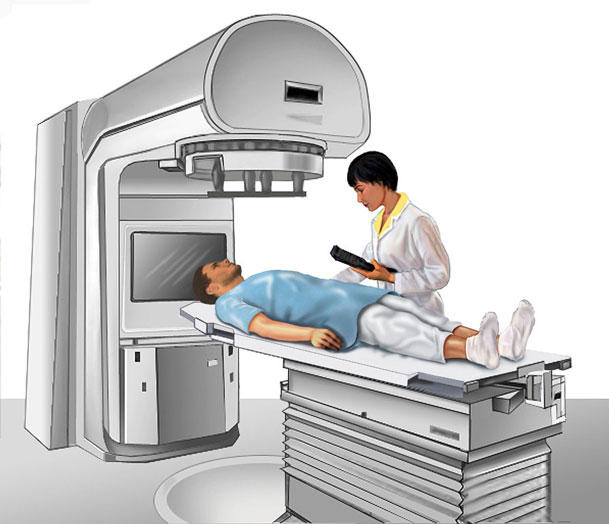

Ultra-Low-Dose Radiation for Bone Pain: Can Less Radiation Be Enough? Radiation therapy can be remarkably effective for cancer-related bone pain. But how much radiation is actually necessary?
A 2026 clinical trial presented at the American Society for Radiation Oncology (ASTRO) Annual Meeting raises an important question for people with multiple myeloma—and perhaps eventually for some patients with other cancers that have spread to bone:
Could a much lower dose of radiation relieve bone pain while reducing treatment burden and potentially limiting radiation exposure to healthy tissue?
Researchers treated painful multiple myeloma bone lesions with only 4 Gy (Gray) of radiation, delivered either as one 4 Gy treatment or two treatments of 2 Gy.
The results were encouraging.
Among evaluable patients:
- 66% experienced a pain response at four weeks.
- 64% experienced a pain response at eight weeks.
- 86% of those evaluated at six months experienced pain relief.
- Only 19% required additional radiation to the same site.
- Treatment-related side effects were uncommon and mild.
Importantly, however, these results apply to selected patients with uncomplicated painful myeloma bone lesions. Patients with spinal cord compression, pathologic long-bone fractures and other urgent complications were excluded from the trial.
Research: ASTRO — Ultra-Low-Dose Radiation Therapy Relieves Bone Pain from Multiple Myeloma
I underwent 44 gy of radiation to my iliac crest over a period of weeks. The good news is that radiation eliminated my severe myeloma bone pain. It eliminated the lesion at that particular spot. But to be clear, my cancer was systemic. The radiation was palliative.
My experience does not mean that another patient should refuse radiation therapy. Radiation can prevent suffering and serious complications and, in certain situations, may be urgently necessary.
My experience has taught me to ask a different question:
What is the lowest effective dose of radiation that can accomplish the treatment goal?
The emerging research into ultra-low-dose radiation makes that question worth discussing.
I have come to believe that therapy-induced side effects, no just from radiation, but from all forms of cancer therapy, can be life-threatening while ruining quality of life. For example, more than half of all MMers die of infections. Both MM itself and various chemotherapy regimens cause immunosuppression.
According to the study of ultra-low-dose radiation therapy, it can manage pain while causing little to no damage.
Scroll down the page and post a question or a comment if there’s anything you’d like to know about bone health.
Good luck,
David Emerson
Concepts Central to Managing Your Cancer-
- Integrative Oncology: Combining Conventional and Natural Cancer Therapies
- Complementary Cancer Therapies: Evidence-based
- Managing Cancer Treatment Side Effects: An Evidence-Based Guide to Prevention, Relief, and Recovery
- Beware of Financial Toxicity in Multiple Myeloma
- Cancer and Pain: What Patients Need to Know
Possible Therapies-
- Radiation for Cancer: What Patients Need to Know
- Surgery for Cancer: What Patients Need to Know
- Immunotherapy for Cancer: What Patients Need to Know Before, During, and After Treatment
- Evidence-Based, Non-Conventional Multiple Myeloma Therapies: What Patients Should Know
- Dara-KRd for Multiple Myeloma: Side Effects, Integrative Therapies, and Recovery
- Multiple Myeloma-Induced Spine Fractures
Why 4 Gy May Work Particularly Well in Multiple Myeloma
Multiple myeloma is unusually sensitive to radiation.
Myeloma develops from malignant plasma cells in the bone marrow and commonly produces osteolytic lesions that can cause:
- Bone pain
- Vertebral compression fractures
- Pathologic fractures
- Spinal instability
- Loss of mobility
- Neurologic complications
Radiation has therefore been used for decades to control selected painful or threatening myeloma lesions. The difference with the new research is the dose. Rather than automatically giving a larger radiation dose, investigators started with only 4 Gy.
Patients whose pain was not adequately controlled could receive additional radiation later. This creates what researchers call a response-adapted approach:
Start with 4 Gy → evaluate the pain response → give additional radiation only if necessary.
The researchers explained that the objective was to provide enough radiation to relieve pain while reducing radiation exposure to healthy bone marrow and preserving the ability to use additional radiation later if necessary.
That concept may be particularly important in multiple myeloma because patients can develop multiple bone lesions over many years and may also require systemic therapies that suppress bone marrow.
For a broader discussion of skeletal complications, see Bone Health in Multiple Myeloma: What Patients Need to Know and Multiple Myeloma Pain.
Could 4 Gy Work for Bone Metastases from Other Cancers?
This is where the discussion becomes more complicated.
Bone metastases occur frequently in advanced cancers such as:
- Breast cancer
- Prostate cancer
- Lung cancer
- Kidney cancer
- Other solid tumors
Radiation is an established treatment for painful bone metastases.
Current ASTRO guidelines recommend several conventional radiation schedules for previously untreated symptomatic non-spine bone metastases, including:
| Radiation schedule | Total dose |
|---|---|
| 8 Gy × 1 treatment | 8 Gy |
| 4 Gy × 5 treatments | 20 Gy |
| 4 Gy × 6 treatments | 24 Gy |
| 3 Gy × 10 treatments | 30 Gy |
Research has shown broadly similar pain relief among these established regimens, although retreatment is more common after single-fraction treatment.
Research: ASTRO Clinical Practice Guideline — Radiation Therapy for Symptomatic Bone Metastases
The important point is that 8 Gy delivered once—not 4 Gy—is currently an established single-treatment regimen for conventional palliation of bone metastases.
Researchers Have Actually Compared 4 Gy with 8 Gy
This is what makes the ultra-low-dose question particularly interesting. Four Gy for metastatic bone pain isn’t simply a theoretical idea. Researchers have tested it.
A large international randomized clinical trial involving 651 patients with painful bone metastases compared a single 4 Gy treatment with a single 8 Gy treatment.
At four weeks:
- Approximately 80% of patients receiving 8 Gy experienced an overall pain response.
- Approximately 68% receiving 4 Gy experienced an overall pain response.
Retreatment was also more common in the 4 Gy group. The researchers therefore concluded that 8 Gy produced more reliable pain relief.
Research: IAEA Randomized Trial — 4 Gy vs. 8 Gy for Painful Bone Metastases
An earlier randomized study of 270 patients produced a similar finding. Pain relief occurred with both doses, but 8 Gy produced a higher overall probability of pain response than 4 Gy.
Research: Prospective Randomized Trial of 4 Gy vs. 8 Gy for Metastatic Bone Pain
These studies are important because they prevent us from drawing the wrong conclusion from the new myeloma research.
4 Gy Is Not a Replacement for 8 Gy for Bone Metastases
At least not based on the evidence we currently have. For painful bone metastases from solid tumors, 8 Gy remains an established single-fraction treatment, and randomized evidence indicates that 8 Gy provides more reliable pain relief than 4 Gy.
But that does not make the 4 Gy research irrelevant. Quite the opposite.
It raises a different question:
Are there selected patients for whom starting with less radiation and adding more only when necessary might provide an acceptable balance between pain relief and treatment exposure?
That is a question worth studying—and discussing with a radiation oncologist.
Myeloma and Bone Metastases Are Not the Same Thing
This distinction is essential. Multiple myeloma bone disease and solid-tumor bone metastases can both cause severe bone pain, but they are biologically different diseases.
Myeloma cells are highly radiosensitive. A prostate, breast, lung or kidney cancer cell growing in bone does not necessarily respond to radiation in the same way.
Therefore, the excellent results seen with 4 Gy in the 2026 myeloma study should not simply be extrapolated to every cancer involving bone.
For more information about cancer-specific bone pain, see:
- Cancer and Pain: What Patients Need to Know
- Breast Cancer and Pain: What Patients and Survivors Need to Know
- Prostate Cancer and Pain: What Patients and Survivors Need to Know
- Lung Cancer and Pain: What Patients and Survivors Need to Know
Why Radiation Dose Matters to Me Personally
I underwent radiation for multiple myeloma lesions involving my spine, sacrum, and iliac crest. The treatment worked.
My bone pain disappeared within weeks.
But years later I developed radiation-induced lumbosacral plexopathy, a serious late neurologic complication that has affected my mobility and quality of life.
I discuss that experience in:
Multiple Myeloma Symptoms, Side Effects — Bone Health and Radiation Damage
and:
Radiation-Induced Lumbosacral Plexopathy
My experience occurred in a different treatment era and should not be used to predict what will happen to someone receiving modern radiation therapy. But it has influenced the way I think about cancer treatment.
When a treatment can accomplish its goal with less exposure to healthy tissue, I believe patients should at least understand that possibility and discuss it with their doctors.
That does not mean choosing an inadequate dose simply because it is lower. It means asking whether the treatment plan is individualized to the patient’s disease, treatment goal, and long-term risks.
Radiation Is Not Just About Pain Relief
There is another important limitation to the ultra-low-dose discussion. A painful bone lesion is not always simply a pain-management problem. Cancer involving bone can sometimes cause:
- Impending fracture
- Pathologic fracture
- Vertebral collapse
- Spinal instability
- Nerve compression
- Spinal cord compression
- Cauda equina compression
These situations can require a completely different treatment strategy.
ASTRO’s current bone-metastasis guideline recommends radiation for symptomatic bone and spine metastases but also emphasizes surgery plus radiation in selected patients with spinal cord or cauda equina compression and postoperative radiation when surgery is required for non-spine bone metastases.
In other words:
The lowest radiation dose is not necessarily the best radiation dose.
The goal is the lowest dose that adequately accomplishes what needs to be accomplished.
Those are very different concepts.
Questions to Ask Your Radiation Oncologist
If radiation is being considered for a painful myeloma lesion or bone metastasis, consider asking:
- What exactly are we trying to accomplish—pain relief, local tumor control, fracture prevention, spinal-cord protection, or something else?
- Is this considered an uncomplicated bone lesion?
- Is there evidence of fracture or impending fracture?
- Is the spine stable?
- Is there any risk of spinal cord or nerve compression?
- What radiation dose do you recommend, and why?
- Could single-fraction radiation be appropriate?
- If I have multiple myeloma, could an ultra-low-dose 4 Gy approach be appropriate?
- What evidence supports that dose for my particular cancer?
- What would happen if we started with a lower dose and my pain did not improve?
- Could the area safely be irradiated again?
- How much bone marrow will be exposed?
- Have I received radiation near this area previously?
- What are the possible long-term effects on nerves, bone, and surrounding tissues?
- How does my expected survival affect the radiation strategy?
The 2024 ASTRO guideline specifically emphasizes incorporating previous radiation, normal-tissue risk, quality of life, prognosis and the patient’s goals and values into treatment selection.
PeopleBeatingCancer Evidence Rating
| Approach | Evidence | What Patients Should Know |
|---|---|---|
| Radiation for painful bone metastases | Strong | Established treatment for appropriately selected patients |
| Single-fraction 8 Gy for uncomplicated painful bone metastases | Strong | Current evidence-based conventional option |
| 4 Gy ultra-low-dose RT for uncomplicated painful multiple myeloma lesions | Promising/emerging | Prospective phase II evidence is encouraging, but this is newer evidence and patient selection matters |
| 4 Gy instead of 8 Gy for routine solid-tumor bone metastases | Insufficient to replace 8 Gy | Randomized trials show pain relief with 4 Gy, but generally better response and less retreatment with 8 Gy |
| Response-adapted 4 Gy followed by additional RT when needed | Promising in myeloma | The 2026 myeloma study suggests this may reduce treatment exposure for selected patients |
| Ultra-low-dose RT for spinal cord compression, unstable spine or pathologic fracture | Not established as a substitute for standard management | These conditions may require higher-dose RT, surgery or other urgent treatment |
How to interpret this table: An emerging or promising therapy is not necessarily ineffective or inappropriate. It means that the evidence is still developing and treatment decisions should account for the patient’s cancer, location of disease, symptoms, previous radiation and treatment goals.
The Bigger Question: Can Radiation Become More Response-Adapted?
To me, this may be the most interesting lesson from the new myeloma study. Traditional radiation treatment generally begins by selecting a dose and completing the prescribed course.
The response-adapted strategy asks something different:
What if we start with enough radiation to help many patients, evaluate the response, and give additional radiation only to the patients who actually need it?
In the 2026 myeloma trial, approximately four out of five patients did not require another course of radiation to the treated site. That doesn’t prove the strategy should be used for every patient.
But it does demonstrate why dose de-escalation deserves continued study.
As cancer patients live longer, issues such as:
- Bone-marrow preservation
- Cumulative radiation exposure
- Reirradiation options
- Late effects
- Treatment burden
- Quality of life
become increasingly important. For more about long-term treatment toxicity, see Managing Cancer Treatment Side Effects: An Evidence-Based Guide.
The Bottom Line
Radiation therapy is one of the most effective treatments available for painful cancer involving bone.
But more radiation is not automatically better radiation.
For multiple myeloma, a new multi-institutional phase II study suggests that only 4 Gy may provide meaningful and durable pain relief for many patients with uncomplicated painful bone lesions, while allowing additional radiation if necessary.
For bone metastases from solid tumors, however, randomized clinical trials tell us something equally important:
4 Gy can relieve pain, but 8 Gy generally provides more reliable pain control and reduces the likelihood of retreatment.
Therefore, 4 Gy should not currently be presented as a replacement for the established 8 Gy single-fraction treatment for ordinary metastatic bone pain.
But patients can ask questions.
If radiation is recommended for bone pain, ask your radiation oncologist:
“What is the lowest effective radiation dose for my particular cancer, lesion, and treatment goal—and why?”
That conversation may be especially worthwhile for multiple myeloma patients, people who have already received radiation, patients with limited bone-marrow reserve, and long-term survivors concerned about cumulative treatment toxicity.
The objective is not simply to use less treatment.
The objective is to use enough treatment to achieve the goal while avoiding unnecessary treatment whenever possible.
For me, as a long-term multiple myeloma survivor who benefited from radiation but also lives with a serious late radiation side effect, that distinction matters.
Research
1. ASTRO — 2026 Ultra-Low-Dose Multiple Myeloma Study
Ultra-Low-Dose Radiation Therapy Relieves Bone Pain from Multiple Myeloma
Prospective multi-institutional phase II trial of 4 Gy response-adapted radiation for painful uncomplicated myeloma bone lesions.
2. ASTRO — Clinical Practice Guideline for Symptomatic Bone Metastases
External Beam Radiation Therapy for Palliation of Symptomatic Bone Metastases
Current guideline addressing radiation dose, fractionation, reirradiation and treatment of complicated bone and spine metastases.
3. IAEA Randomized Trial — 4 Gy vs. 8 Gy
IAEA Randomised Trial of Optimal Single-Dose Radiotherapy for Painful Bone Metastases
651-patient randomized trial showing that both doses can relieve pain but 8 Gy produced higher response rates and fewer retreatments.
4. Hoskin et al. — Randomized 4 Gy vs. 8 Gy Trial
A Prospective Randomised Trial of 4 Gy or 8 Gy for Metastatic Bone Pain
Earlier randomized trial demonstrating a greater probability of pain relief following 8 Gy.
5. International Myeloma Working Group — Myeloma Bone Disease
Recommendations for the Treatment of Multiple Myeloma-Related Bone Disease
Guidance addressing bone-modifying therapy, radiation, vertebral augmentation and orthopedic intervention in myeloma bone disease.
Ultra-Low-Dose Radiation for Bone Pain Ultra-Low-Dose Radiation for Bone Pain Ultra-Low-Dose Radiation for Bone Pain