
A Long-Term Myeloma Survivor: I Wish I Knew Then What I Know Now
I went under the knife and woke up eight hours later. My pathologist, Dr. Makely gently explained that I had multiple myeloma (MM). A week later my oncologist Dr. Berger told me I had a single plasmacytoma of bone (SPB). Two “experts” two different diagnoses. Wait, what?
My path to becoming a long-term myeloma survivor has been filled with ups and downs and short, long-term and late stage side effects. I wish I knew then what I know now.
Pre-myeloma (SPB, MGUS, SMM) is a rare blood disorder. Full multiple myeloma (stage I,II,III) is a rare, incurable blood cancer. At the time of my diagnoses, diagnostic testing was not as thorough as it has become today. There were many fewer chemotherapy regimens specific to myeloma than there are now. Many oncologists today specialize in the treatment of multiple myeloma.
When I reached end-stage myeloma, my oncologist told me “there is nothing more we can do for you.”
Dr. Rassiga actually did me a favor. By kicking me out the door, she forced me to stop relying on conventional oncology for treatment of my blood cancer.
I learned the hard way that the key is to treat both your myeloma as well as your health when you are diagnosed with cancer.
Go to our Resources Center and download free information about pre-myeloma, full myeloma and short, long-term and late stage side effects.
David.PeopleBeatingCancer@gmail.com
If you have been diagnosed with Pre-Myeloma (SBP, MGUS, SMM) or full Multiple Myeloma (stage I,II,III) research shows that you will live a better, longer life and make better treatment decisions about your care by learning about your own prognosis, diagnostic criteria and therapy plan including your:
- Symptoms – Bone, nerve, joint pain- kidney involvement, thick blood, etc
- Prognosis- Understand the basics of your blood cancer-
- Staging – Pre-myeloma, Early Myeloma, Average Newly Diagnosed Myeloma, Elderly Myeloma
- Diagnostic Criteria – C.R.A.B, SLiM, CBC, BMB, M-spike, Immunoglobulins, Freelight Chains, Genetics, etc.
- Standard-of-Care Conventional Myeloma Therapies – Chemotherapy, Radiation, Surgery- Induction, Auto SCT, Maintenance Therapy
- Evidence-based Non-Conventional, Non-Toxic Therapies – Anti-MM Nutrition, Supplements, Lifestyle-
Conventional oncology is excellent at what it does. But conventional therapies are one small piece of the total Myeloma Puzzle- if you want to enjoy both quality of life and quantity of life. The cancer coaching courses outline the strengths and weaknesses of conventional oncology. Evidence-based information that will help you make better decisions to reach your own treatment goals.
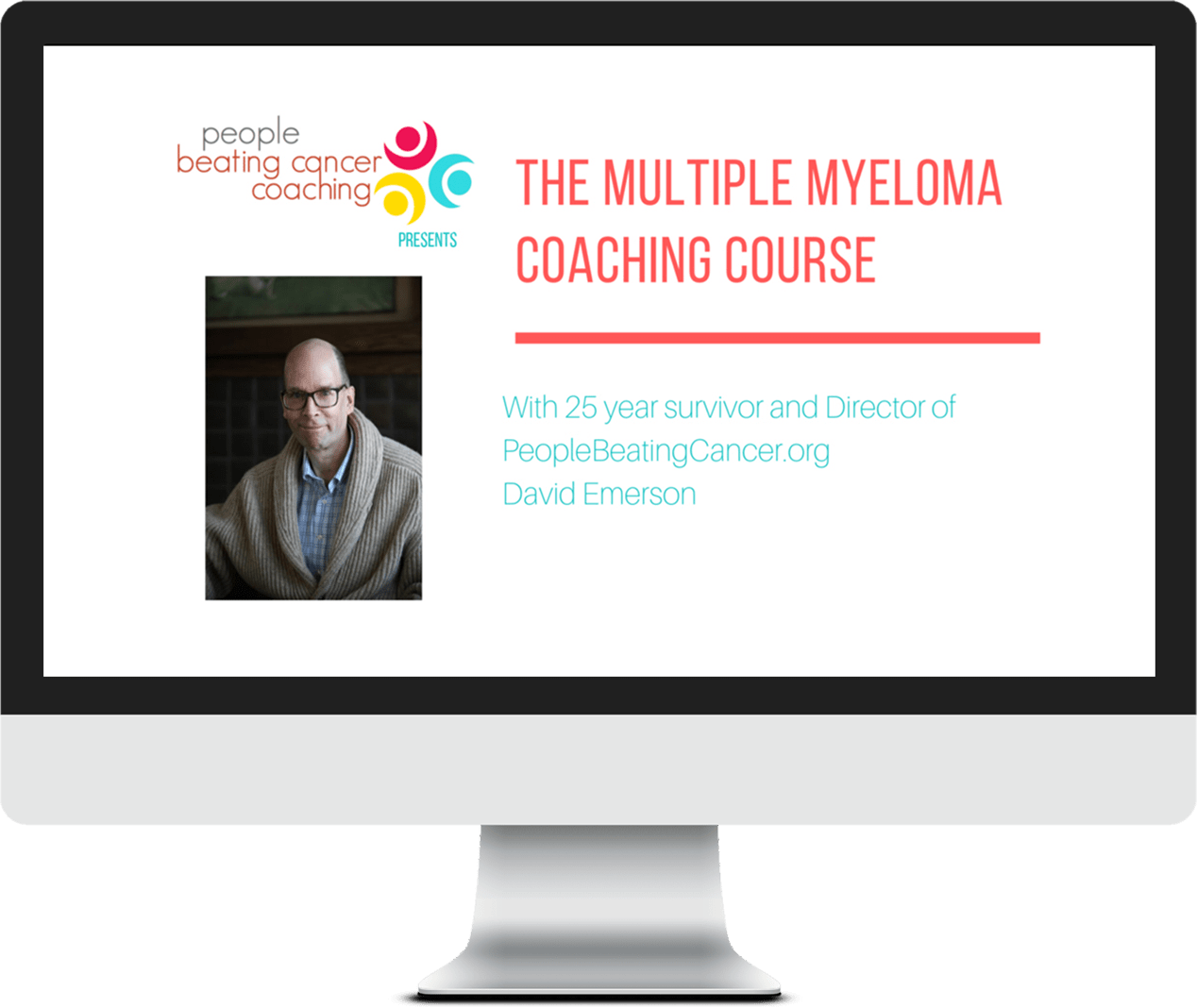
- Pre-Myeloma Cancer Coaching Program- Course, Consultation, Closed/Private Online Group.
- Multiple Myeloma Cancer Coaching Program- Course, Consultation, Closed/Private Online Group.
- Side Effects Coaching Program– Course, Consultation, Closed/Private Online Group.
Unsure about your next steps? Schedule a coaching call with me to discuss your diagnosis, drill down your concerns, and start to build a management plan. Schedule a call here.
I learned how evidence-based, non-toxic therapies must be a part of your therapy plan.
Since undergoing a controversial non-conventional cancer therapy and achieving complete remission in early 1999, I’ve learned that there are dozens of evidence-based, complementary and integrative therapies that research has shown can both reduce toxicity while enhancing the efficacy of chemotherapy and radiation and/or can kill Multiple Myeloma.
I’ve utilized these evidence-based non-conventional, non-toxic therapies to remain in complete remission from my incurable blood cancer. Anti-oxidant/anti-inflammatory/anti-angiogenic nutrition, supplementation and lifestyle therapies can kill myeloma as well as help myeloma survivors stay strong before, during and after therapy.
My myeloma experience illustrates why conventional oncology is only a small piece of the cancer care picture.
Learning about your multiple myeloma will help you reduce your risk of the short, long-term and late stage side effects that I now live with.
Side effects such as:
- Treatment-Induced Short-Term Side Effects
- Treatment-induced Aging
- Chronic Non-Cancer Pain
- Treatment-induced Relapse
- Treatment-related Secondary Cancer
- Corticosteroid-induced Avascular Necrosis
- Treatment-induced Cognitive dysfunction-Chemobrain
- Treatment-induced Nerve Damage-CIPN and RILP
- Treatment-induced Cardiomyopathy- Heart Damage
- Treatment-induced Atrial Fibrillation- Afib
- Treatment-induced hypertension –High blood pressure
- Treatment-induced Hemorrhagic Cystitis-Irritible bladder
- Therapy-induced Dysphagia-Difficulty Swallowing
- Therapy-induced Xerostomia- Dry Mouth
- Therapy-induced Deep Vein Thrombosis- blood clot
- Managing Mental Health as a Cancer Survivor-
If you have any questions or comments, please send me your questions here.
David Emerson
- Cancer Survivor
- Cancer Coach
- Director PeopleBeatingCancer
Recommended Reading:
- Multiple Myeloma Diet
- Autologous Stem Cell Transplant Show NO OVERALL SURVIVAL for Myeloma
- ASCT for Multiple Myeloma? C-Reactive Protein Indicates OS-
- Learn, Anticipate and Prevent Multiple Myeloma Treatment Side Effects-
- Antineoplaston Therapy (ANP)-From End Stage Multiple Myeloma to Complete Remission
- Cancer Coaching Testimonials- PeopleBeatingCancer