PeopleBeatingCancer supports an evidence-based integrative approach to cancer care. For most newly diagnosed patients, FDA-approved therapies form the foundation of treatment, while evidence-based complementary therapies may help reduce side effects and improve survivorship.
Click the orange button to the right to learn more.
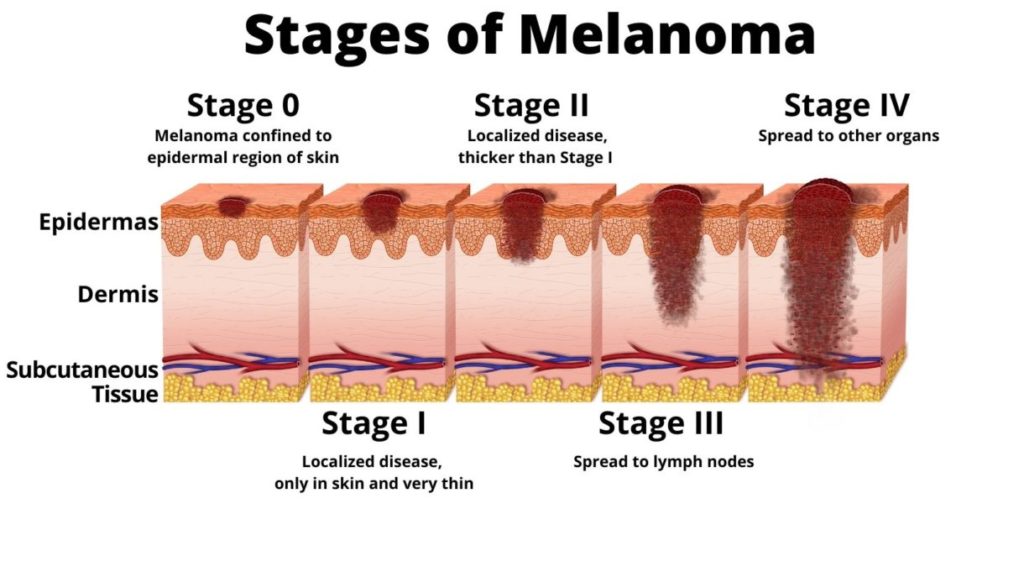
Melanoma in situ, technically speaking, is cancer. However, the issue is the risk that this skin growth could cause health problems. The risk of melanoma in situ metastasizing or becoming a serious melanoma diagnosis is small.
“In situ – Latin for “in place,” this typically means good news since it refers to a cancerous but noninvasive tumor that has not penetrated beyond the epidermis into the dermis. But even skin cancers diagnosed in the early stages can be painful or cause scarring and may require multiple treatments. In situ skin cancers can also become invasive if not removed in a timely way.”
Is melanoma in situ serious?
Melanoma in situ (Stage 0 melanoma) is highly curable when removed early, with very low risk of spread or death. However, patients still have a long-term risk of developing another melanoma (≈4–12% over 5–15 years) and must continue skin monitoring.
I have learned the hard way that conventional therapies such as chemotherapy and radiation have strengths and weaknesses, pros and cons. Chemotherapy and radiation are highly toxic, aggressive cancer therapies. In the case of melanoma stage 0, I believe that the toxicity of chemo or radiation could cause many more problems than they solve. For example, chemotherapy and radiation can increase the risk of secondary cancers.
Therefore, in the case of melanoma in situ, the risk of metastasis, not to mention the risk of death, is so small that I believe the best therapies are evidence-based but non-toxic.
Standard Treatment (Excision + Margins)
To put this “risk” into evidence-based terms with therapies, according to research, the two most effective therapies to reduce the risk of early cancer becoming serious melanoma that can cause problems is to:
Surgically remove the growth
Nutrition, supplementation, and lifestyle therapies
Can diet and supplements reduce melanoma risk?
Researchers have investigated vitamin D, omega-3 fatty acids, curcumin, green tea polyphenols, resveratrol and other compounds for their potential effects on inflammation, immune function and melanoma biology. However, the strength of the evidence varies considerably, and most supplements have not been proven to prevent melanoma recurrence. See Skin Cancer and Supplementation: What the Research Says and Vitamin D, Melanoma, Skin Cancer: What the Research Shows for a closer look at the evidence.
Recurrence extremely low when fully excised (~99% no recurrence in one study)
Subsequent invasive melanoma risk:
5 years: ~4%
10 years: ~8%
15 years: ~11.7%
Factor
Risk Level
Fully excised lesion
Very low
Lentigo maligna subtype
Moderate
Positive margins
Higher
History of melanoma
Higher
What I would do if I were diagnosed with melanoma in situ
Don’t panic (curable)
Confirm clear margins
Build a long-term prevention plan
Monitor regularly
Often, only one follow-up visit is needed for stage 0
But lifelong self-monitoring is critical
PeopleBeatingCancer Evidence Rating: Integrative Therapies for Melanoma
Integrative therapies can play a useful role in melanoma care, but the strength of the evidence varies enormously. Some approaches have human clinical data suggesting a benefit, while others are supported primarily by laboratory or animal research.
The PeopleBeatingCancer Evidence Rating below is designed to make that distinction clear.
PBC Rating
Meaning
★★★★★ Established
Supported by substantial clinical evidence and/or incorporated into accepted cancer-supportive care.
★★★★☆ Strong/Promising
Meaningful human evidence, but not enough to consider the therapy an established melanoma treatment.
★★★☆☆ Emerging
Human observational or early clinical evidence suggests potential benefit; more trials are needed.
★★☆☆☆ Preliminary
Primarily laboratory/animal evidence with little melanoma-specific human evidence.
★☆☆☆☆ Insufficient
Evidence is weak, inconsistent, or inadequate to recommend the intervention specifically for melanoma.
Integrative Melanoma Therapy Evidence Table
Integrative approach
PBC Evidence Rating
What the evidence suggests
Important limitation
High-fiber, plant-rich diet
★★★★☆ Strong/Promising
Among patients with melanoma receiving immune-checkpoint inhibitors, higher dietary fiber intake has been associated with improved treatment response and progression-free survival, potentially through effects on the gut microbiome.
Evidence does not establish a high-fiber diet as a treatment for melanoma by itself.
Mediterranean-style diet
★★★☆☆ Emerging
Prospective melanoma research has associated Mediterranean dietary patterns with better response and progression-free survival during immune-checkpoint therapy.
Primarily observational evidence; randomized melanoma trials are still needed.
Maintaining a healthy gut microbiome through diet
★★★☆☆ Emerging
Multiple melanoma studies show associations between gut microbial composition and response to anti-PD-1/checkpoint therapy.
Scientists have not identified a single “ideal” melanoma microbiome or proven a specific microbiome regimen.
Vitamin D — correcting deficiency
★★★☆☆ Emerging
Low vitamin D levels have repeatedly been associated with thicker melanoma and poorer melanoma outcomes.
Association does not prove that vitamin D supplementation prevents recurrence or improves survival.
High-dose vitamin D as an anti-melanoma therapy
★☆☆☆☆ Insufficient
Biological and observational evidence originally made vitamin D attractive as an adjunctive strategy.
A randomized trial found that high-dose vitamin D supplementation did not improve melanoma recurrence or survival, so it should not be portrayed as an anti-melanoma treatment.
Exercise / regular physical activity
★★★☆☆ Emerging for melanoma; ★★★★★ for general survivorship
Exercise can improve physical function, fatigue and quality of life during and after cancer treatment. A melanoma exercise trial found supervised exercise feasible and safe during checkpoint therapy.
There is not yet strong evidence that exercise specifically reduces melanoma recurrence or mortality. Outdoor exercise also requires careful UV protection.
Omega-3 fatty acids
★★☆☆☆ Preliminary
Human studies show possible protection against UV-induced immune suppression and DNA damage, and melanoma immunotherapy studies have found associations between dietary omega-3 intake and favorable outcomes.
There is no convincing clinical evidence that omega-3 supplements treat melanoma or prevent its recurrence.
Curcumin
★★☆☆☆ Preliminary
Curcumin has demonstrated anti-proliferative, pro-apoptotic and other anti-melanoma effects in cell and animal models.
Human melanoma treatment trials establishing clinical benefit are lacking.
Green tea / EGCG
★★☆☆☆ Preliminary
Polyphenols have plausible antioxidant, anti-inflammatory and anticancer mechanisms and laboratory evidence relevant to skin carcinogenesis.
There is inadequate clinical evidence that green tea or EGCG prevents melanoma recurrence or improves melanoma survival.
Resveratrol
★★☆☆☆ Preliminary
Laboratory and animal studies suggest potential effects on melanoma proliferation, signaling and tumor biology.
Clinical melanoma evidence is lacking; laboratory activity should not be confused with proven patient benefit.
Probiotic supplements
★☆☆☆☆ Insufficient / potentially problematic
The microbiome clearly matters in melanoma immunotherapy. However, that does not mean commercial probiotic supplements improve it.
In the landmark melanoma study, probiotic supplement use was not associated with better immunotherapy outcomes, while higher dietary fiber was associated with better outcomes.
Antioxidant supplements
★☆☆☆☆ Insufficient / use caution
Antioxidants are biologically active and frequently promoted to cancer patients.
There is no established melanoma survival benefit, and preclinical melanoma research raises concern that certain antioxidant supplements could potentially facilitate metastatic behavior.
Meditation, yoga, mindfulness and stress reduction
★★★★★ for supportive care; ★☆☆☆☆ as melanoma therapy
These approaches may help cancer patients with anxiety, stress, sleep and quality of life as part of supportive care.
There is no credible evidence that they shrink melanoma or prevent melanoma recurrence.
What stands out from the evidence?
For me, one of the most interesting findings is that the strongest melanoma-specific integrative evidence currently isn’t coming from a supplement.
It is coming from food and the microbiome.
In melanoma patients receiving immune-checkpoint inhibitors, higher dietary fiber intake was associated with improved progression-free survival. The strongest outcomes in the landmark study occurred among patients reporting sufficient fiber intake without probiotic supplement use.
Additional melanoma research has connected diet, microbial composition and checkpoint-inhibitor outcomes, although these findings remain an evolving area of oncology rather than established treatment recommendations.
That makes a high-fiber, predominantly plant-based dietary pattern one of the more scientifically interesting integrative approaches for patients receiving melanoma immunotherapy.
Vitamin D deserves a separate category
Vitamin D illustrates exactly why I think the PeopleBeatingCancer Evidence Rating is useful.
Observational research consistently finds that lower vitamin D levels are associated with more aggressive melanoma characteristics and poorer outcomes.
That might make it sound as though taking vitamin D would prevent melanoma recurrence.
But a randomized placebo-controlled trial involving patients with resected cutaneous melanoma found that monthly high-dose vitamin D supplementation did not improve relapse-free survival, melanoma-related mortality or overall survival.
Therefore, I would distinguish between:
Correcting vitamin D deficiency — reasonable and supported by general health considerations
versus
Taking high-dose vitamin D to treat melanoma — not supported by clinical evidence.
That distinction is exactly what PBC’s rating system should communicate.
Supplements versus food
There is another important distinction for melanoma patients receiving immunotherapy.
The emerging evidence favors dietary patterns—particularly fiber-rich foods—rather than attempting to manipulate the microbiome with probiotic supplements.
Similarly, compounds such as curcumin, resveratrol, green-tea polyphenols and omega-3s may have biologically interesting anticancer effects, but their evidence should be described as preliminary rather than clinically proven melanoma therapies. Curcumin is a particularly good example: melanoma inhibition has been demonstrated repeatedly in laboratory and animal research, but clinical efficacy in melanoma patients remains unproven.
PeopleBeatingCancer Bottom Line
For melanoma, I would divide integrative strategies into three practical groups:
Most evidence: High-fiber whole-food diet, healthy dietary patterns, exercise for survivorship, and correcting nutritional deficiencies.
Promising but still emerging: Gut-microbiome optimization through diet, Mediterranean-style eating, vitamin D status and dietary omega-3 intake—particularly in the context of immunotherapy.
Interesting but preliminary: Curcumin, green tea/EGCG, resveratrol and supplemental omega-3s.
None of these should replace surgical excision, dermatologic surveillance, immunotherapy, targeted therapy or other evidence-based melanoma treatment when clinically indicated. NCI continues to identify surgery and systemic therapies—not complementary supplements—as established melanoma treatment approaches.
For the melanoma-in-situ article specifically, I would use this table but add one sentence immediately above it:
For melanoma in situ (Stage 0), integrative therapies should be viewed primarily as strategies for overall health and possibly reducing future risk—not as substitutes for complete surgical removal and ongoing skin surveillance.
That keeps the page very consistent with the editorial distinction PBC is increasingly making between “biologically plausible,” “promising,” and “clinically demonstrated.”
I have been researching and writing about melanoma for years now. Consider thinking outside of the conventional oncology box:
To summarize, if you have been diagnosed with melanoma stage 0 or in situ, you don’t have to worry. Take your health more seriously, yes. Consume a nutrition-dense diet. Exercise moderately but frequently. And supplement with the nutritional supplements listed above.
If you have any questions or comments, scroll down the page and send me a post. I will reply to you ASAP. In the meantime, thanks for your time and attention.
👉 Key takeaway: Melanoma in situ is associated with near-100% disease-specific survival when treated appropriately.
Leave a Comment:
2 comments
Marilyn says
a couple of weeks ago
I’ve had 2 surgeries for melanoma skin cancer on upper arm and there is still residual melanoma in situ. How many times can I continue to have surgeries safely. What is a normal amount of surgeries? I am 90 and wonder if it’s worth it at this age.
Melanoma In Situ: Should You Worry? Is one of the most frequently visited blog posts on PeopleBeatingCancer.org. I believe this is a good indicator that melanoma in-situ is a frequent diagnosis and, as a result, many people have questions about their diagnosis.
The short answer to your question, Marilyn, is that you are the only person who can answer the “is it worth it?” question. It’s you, your body, your skin, etc.
I consider it my job to give you the information needed to answer your questions fully. In my experience, information such as:
what is normal?
what is safe?
what is my risk?
what do I do if I want to undergo additional therapies?
Are questions and answers that may help.
In my experience as a long-term cancer survivor, the two main issues to consider are 1) risks and 2) potential side effects. By this I mean that, for example, is there any downside risk of additional Mohs surgeries when compared to the benefit of reducing the risk of melanoma becoming more advanced?
Granted, your risk of the current melanoma becoming more advanced is minimal. And different people have different tolerances for Mohs surgeries.
I hope this helps, Marilyn. Please be sure to ask me any questions you may have.
Thanks and good luck,
David Emerson
Cancer Survivor
Cancer Coach
Director PeopleBeatingCancer
Managing melanoma can be difficult. Knowledge is power.-
Melanoma vs. Non-Melanoma Skin Cancer: Diagnosis, Symptoms and Differences
Malignant Melanoma-Stage Dictates Prognosis
Melanoma- Integrative – Enhance Outcomes
Melanoma Survivorship: A Long-Term Follow-Up Guide
Skin Cancer: Need-to-Know
In order to reply to Marilyn, I have to make several assumptions.
I am going to assume that the original diagnosis was “melanoma in situ” or skin cancer stage 0.
I am going to assume that the previous diagnoses that you refer to, Marilyn, were also melanoma in situ. A diagnosis of melanoma at a later stage would warrant a different answer. A “wide excision” procedure would also warrant a different answer.
I will break down your question into separate questions so that I can address each fully.
How many times can I continue to have surgeries safely?
There is no lifetime limit on the number of times you can undergo Mohs surgery. Because it is performed under local anesthesia and preserves the maximum amount of healthy tissue, it can be safely repeated on new or recurrent skin cancers as many times as medically necessary. [1, 2, 3]
What is a normal number of surgeries?
There is no single “normal” number of Mohs surgeries a person can have in their lifetime. Because the procedure is safe, localized, and designed to save healthy skin, a person might have one Mohs surgery, three surgeries, or even dozens over a lifetime if they are prone to developing skin cancers.
Instead, “normal” is usually looked at in two distinct ways:
1. The Number of Procedures in a Lifetime
For someone with standard sun exposure, one or two lifelong procedures is common. However, for individuals with a history of multiple skin cancers or extensive sun damage—like having three separate diagnoses of melanoma in situ—undergoing three or more separate Mohs procedures is entirely normal and expected. Your personal “normal” is determined by your genetics, your past UV exposure, and how frequently your dermatologist catches new lesions.
2. The Number of “Rounds” During a Single Surgery
When doctors talk about numbers in a single Mohs surgery appointment, they usually refer to the stages or rounds required to completely clear one tumor: [1]
1 to 2 rounds: This is the statistical average. The surgeon removes a thin layer of skin, checks it under a microscope, and finding clear margins means the surgery is done. [1, 2]
3 or more rounds: If the cancer’s “roots” extend deeper or wider than they appear on the surface, the surgeon will repeat the process until 100% of the cancer is gone. [1, 2]
Because you have had three diagnoses, your dermatologist will likely keep you on an accelerated monitoring schedule to catch any future spots early. [1]
What Is Melanoma In-Situ?
Definition: Abnormal cancer cells stay only in the top layer of skin (the epidermis) and have not moved deeper.
Spread: It has zero risk of spreading (metastasis) to other parts of the body at this early stage. [1, 2]
Survival Statistics
Cure Rate: The disease is considered non-life-threatening before it invades deeper tissue.
15-Year Survival: Studies show a 98.4% melanoma-specific survival rate over 15 years.
Overall Life Expectancy: People diagnosed with melanoma in-situ often have a normal or even higher relative survival rate compared to the general population, largely because these patients tend to practice healthy, proactive self-care and get regular medical checkups. [1, 2, 3]
Treatment and Prevention
Removal: Doctors usually cure the condition completely with a simple surgical excision to cut out the spot with a small safety margin of normal skin.
Monitoring: Patients need ongoing skin checks because having one melanoma increases the chance of getting a new one later. [1, 2]
Next Steps and Treatment
How wide of a margin do you need to take during the re-excision?
Will this procedure be done in the office under local anesthesia?
What is the timeline for scheduling and treatment?
Recovery and Wound Care
How long will it take for the new surgical site to heal?
What activity restrictions will I have after the procedure?
Will I need stitches, and if so, when do they come out?
Future Monitoring
How often will I need full-body skin checks moving forward?
What specific changes should I look for during my own self-exams?
Do you recommend using digital mole mapping or photography to track my skin?